Urban Elements Design & Guidelines
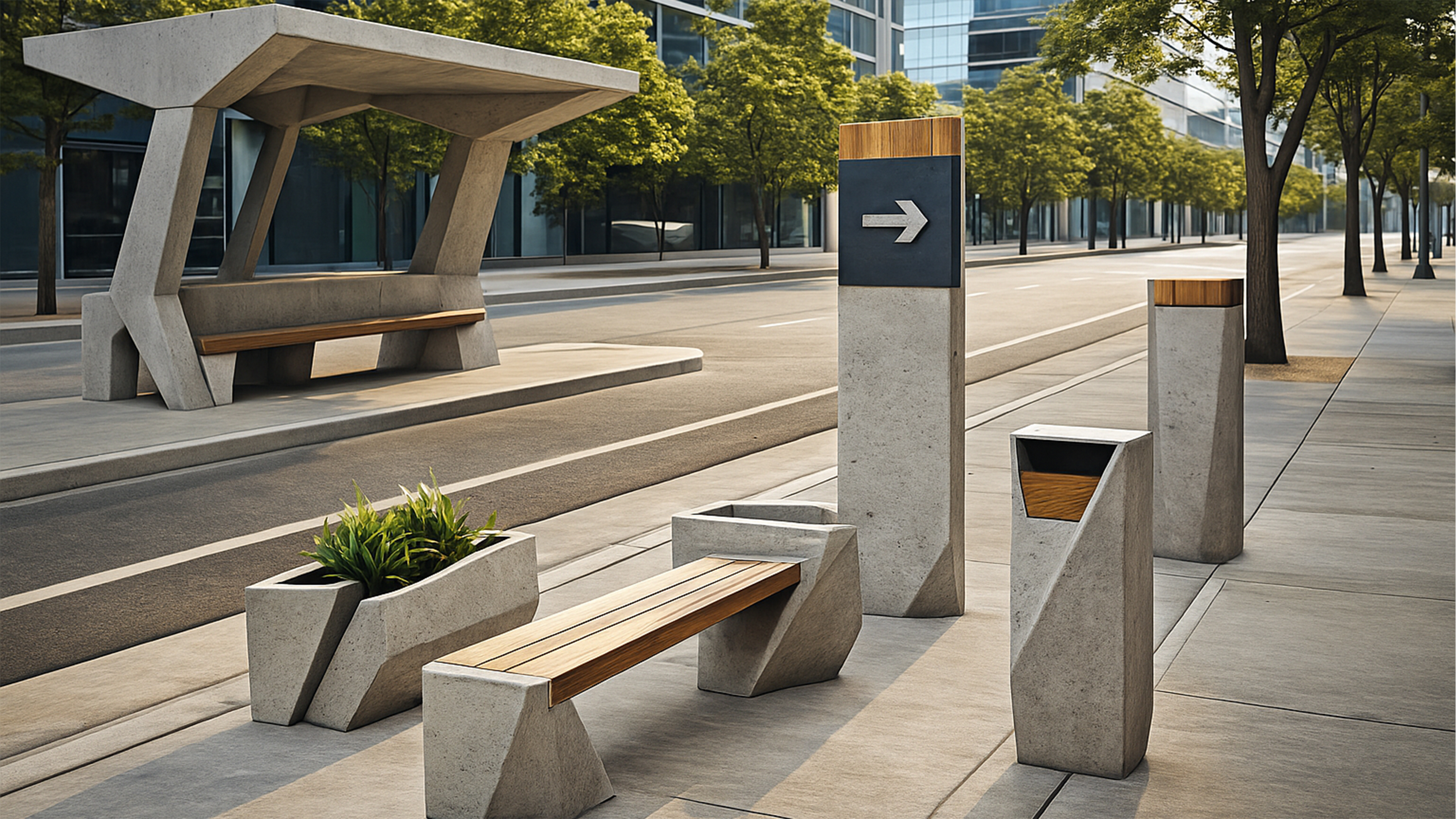
The design of a cohesive family of urban elements for public realm and public space design, including street furniture, mobility stops and stations, lighting, shading structures, planters, bollards, waste bins, and primary wayfinding elements.
Each element translates the place identity into a clear and unified design language, ensuring consistency across the built environment.
The designs are then developed into structured guidelines, ready for implementation through a design-and-build process.
Stage 1: Concept Design
Tasks
- Site and context analysis
- Benchmarking and precedent review
- Development of 2–3 urban elements concept options (moodboards and sketches)
- Definition of element typologies and requirements
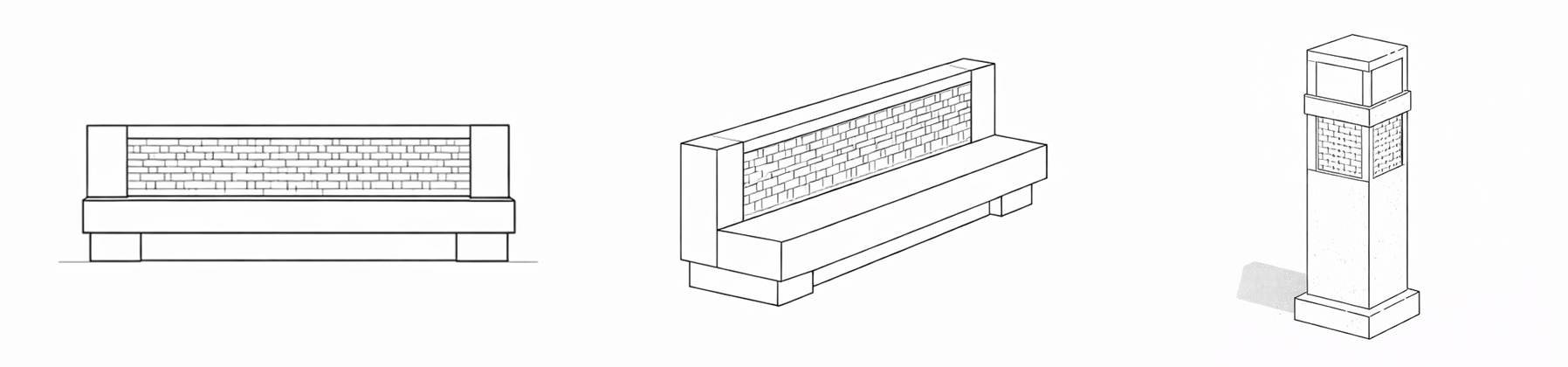
- Initial modular system logic
Deliverables
- Concept Design Report [PDF]
Stage 2: Schematic Design
Tasks
- Development of the full family of urban elements based on selected concept
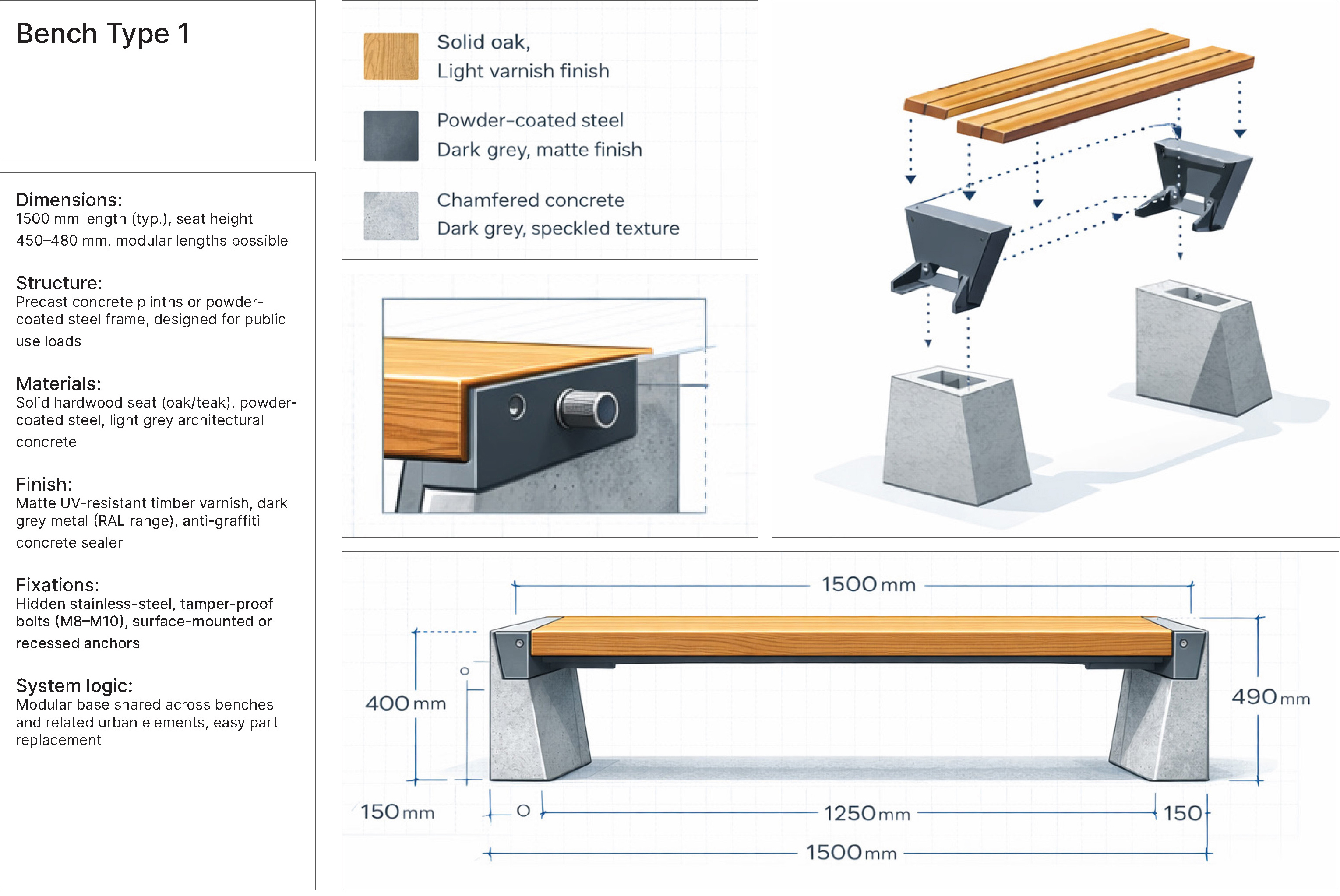
- Scale and dimension definition
- Preliminary placement and usage guidelines
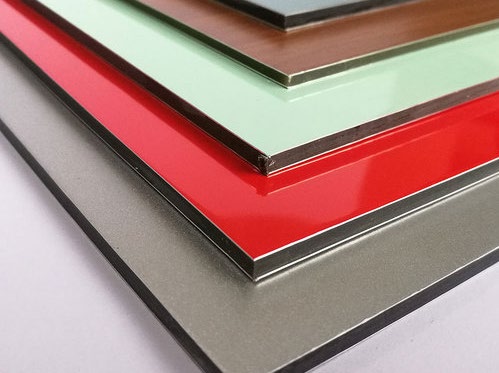
- Material and fixation strategy
Deliverables
- Schematic Design Report [PDF]
Stage 3: Design Guidelines
Tasks
- Consolidation of urban elements design guidelines
- Final scale, dimensions, and modular system
- Placement and distribution guidelines across the public realm
- Material and fixation specifications
Deliverables
- Urban Elements Design Guidelines Booklet [PDF]